
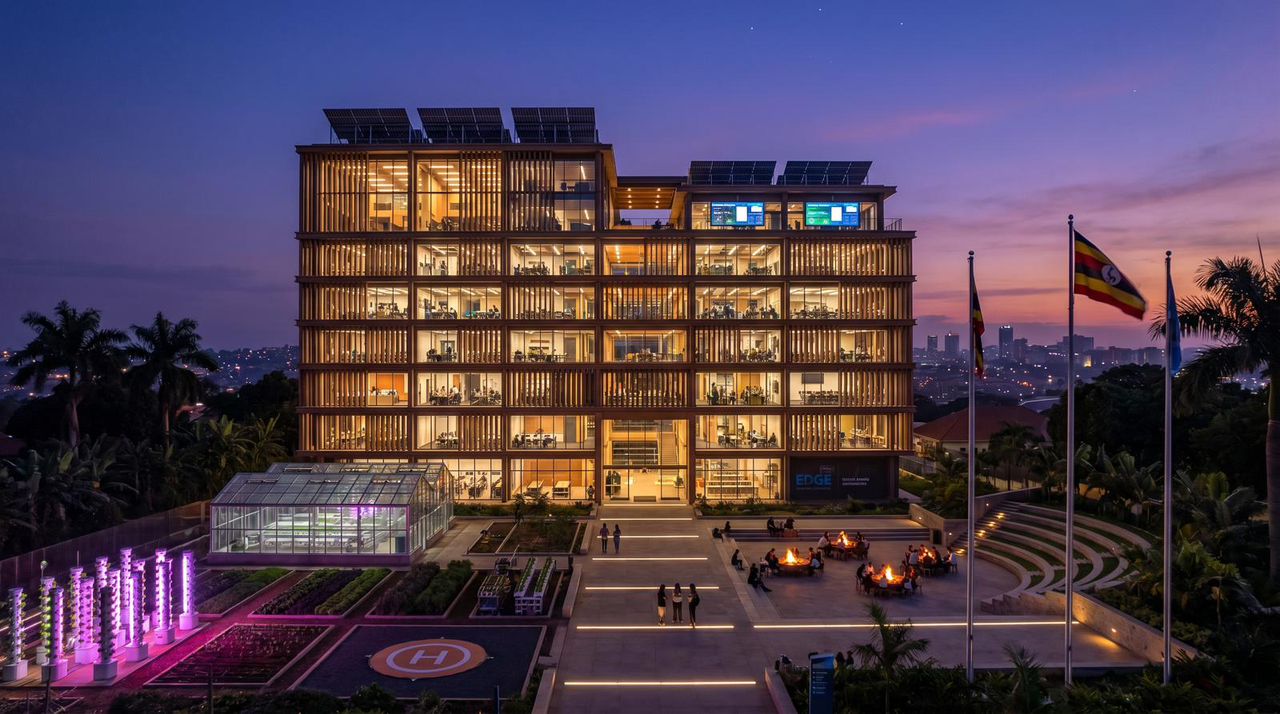
Diploma in Renewable Energy and Battery Storage Technology
Uganda's energy transition has moved past the rooftop: commercial and industrial solar is the sector's growth engine, storage is arriving in containers, minigrids are a licensed industry, and every energy company's org chart shows the same hole between the installer and the engineer.
Pricing Model 5.1 · The Forward Standard
Diploma in Renewable Energy and Battery Storage Technology fee
UGX 900,000 per year
Forward College programmes carry no laboratory premium. The whole-programme total follows the published annual anchor and this programme's duration.
- Laboratory tier
- No laboratory premium
- Annual premium
- UGX 0
- Per semester
- UGX 450,000
- Whole programme
- UGX 1,800,000
- Approximate USD
- ≈ USD 474
What this fee includes
- Teaching, practice tutoring, assessment and competency verification
- The Amagezi platform and AI tutor around the clock
- All learning materials
- Every examination, including first resits
- Identity card, library, guild, sports and basic wellbeing
- Co-op placement matching and the Capability Passport
- Graduation and the statutory NCHE fee
- Online application
Occupational profile
What you'll be paid to do
Uganda's energy transition has moved past the rooftop: commercial and industrial solar is the sector's growth engine, storage is arriving in containers, minigrids are a licensed industry, and every energy company's org chart shows the same hole between the installer and the engineer.
That hole, the design capable, commissioning competent, fleet managing technician, is currently filled with imported skills at imported prices.
The graduate works as any of the following, employed or self employed, across the region's energy sector:
Operations and Portfolio operators, minigrid UGX 800,000 to 1,800,000 consultant practice employed
| Occupation | Where the work is | Starting earnings, observed 2026 |
|---|---|---|
| Solar design technician | Energy companies, EPC contractors, consultancies | UGX 900,000 to 2,000,000 monthly |
| Energy storage technician | Storage integrators, commercial operators, telecom power | UGX 900,000 to 2,200,000 monthly; the scarcest skill |
| Operations and maintenance supervisor | Portfolio operators, minigrid companies | UGX 800,000 to 1,800,000 monthly |
| Energy auditor and consultant | Consultancies, ESCOs, own practice | Project rates; audit fees self employed |
The 90-Day Promise
From certification to income, stated concretely
Day Pathway Named employer categories with which the College holds or is concluding placement and hiring partnerships: solar and storage EPC companies; minigrid developers and operators; energy consultancies and ESCOs; distributors.
Partnership target: twenty active partners by the first cohort's year two training, each offering at least two placements.
The ninety day pathway from certification to income:
Day 0: graduation with the Capability Transcript, the mentor's reference, and an exit project that is a commissioned system with a bankable pack.
Day 0: graduation with the Capability Transcript, the mentor's reference, and an exit project that is a commissioned system with a bankable pack.
Days 1 to 30: employed route: three arranged interviews with placement hosts who have seen the graduate design and commission. Self employed route: the enterprise's contracts continue; the mentor reviews month one.
Days 31 to 90: employed route: probation support from the practice tutor. Self employed route: referral listing for partner overflow design and O&M work, standing terms in the partnerships.
Measurement: employment or trading status recorded at day 90 and published in the annual outcomes report, per Part Two, section 2.9.
Programme structure
Every module, with its arithmetic
One credit unit equals ten notional learning hours. 240 credit units, 2400 notional hours: 710 contact, 1300 practical and 330 industrial hours, so practical and industrial hours are 68 per cent of the programme.
h and g aic d al p ies One and and s ng s, Two ent Practical and industrial hours together are 1630 of 2400 notional hours, 68 per cent, meeting the hands on test.
Semester 1
| Code | Module | CU | Contact h | Practical h | Industry h |
|---|---|---|---|---|---|
| REN101 | Safety,Diploma holders sign for other people's safety. This module raises the certificate's safety craft to system level: standards, | 8 | 35 | 45 | 0 |
| REN102 | Electrical Engineering PrinciplesThe mathematics and physics a designer actually uses, taught to diploma depth through energy system examples: AC and DC analysis, power, machines and the calculations behind every sizing table. | 14 | 65 | 75 | 0 |
| REN103 | Solar Photovolt aic Systems, AdvancedFrom installer to designer: array behaviour, stringing, shading mathematics and the commissioning science behind reliable solar at any scale. | 14 | 45 | 95 | 0 |
| PRO201 | Professional Communication and Team LeadershipDiploma holders supervise, present and negotiate. This module upgrades the certificate's communication craft into professional leadership: briefing teams, writing for decision makers and representing an employer. | 6 | 30 | 15 | 0 |
Semester 2
| Code | Module | CU | Contact h | Practical h | Industry h |
|---|---|---|---|---|---|
| REN104 | Battery Storage TechnologiesStorage is the decade's technology: chemistries, management systems and the engineering behind safe, long lived banks from home scale to containerised commercial systems. | 14 | 50 | 90 | 0 |
| REN105 | Power Electronics and InvertersThe intelligence between sun, storage and load: the learner understands, configures and diagnoses the inverters and converters every modern energy system runs on. | 12 | 45 | 75 | 0 |
| REN106 | Energy Assessments and AuditsEvery good system starts with an honest audit: loads measured, tariffs understood, and the efficiency wins found before the generation is sized. | 10 | 35 | 65 | 0 |
| REN107 | Installation Practice at ScaleThe diploma keeps its hands: commercial scale installation practice on the training field, where design meets torque and the learner leads small crews. | 10 | 20 | 80 | 0 |
| SPND201AI spine | AI and Data in Energy SystemsThe spine at diploma depth: monitoring fleets, yield analytics, AI assisted design and the data discipline that turns installed kilowatts into managed assets. | 14 | 50 | 90 | 0 |
| ITRD201 | Industrial Training OneTen assessed weeks with an energy company at the end of year one, under the Part Two policy. | 16 | 0 | 10 | 150 |
Semester 3
| Code | Module | CU | Contact h | Practical h | Industry h |
|---|---|---|---|---|---|
| REN201 | Commercial and Industrial Solar DesignThe market's growth segment designed end to end: the learner produces bankable commercial and industrial solar designs, from the factory roof survey to | 16 | 55 | 105 | 0 |
| REN202 | Minigrid FundamentalsBeyond the fence: the learner enters the minigrid sector at technician depth: generation, distribution, metering and the community realities that decide success. | 10 | 40 | 60 | 0 |
| REN204 | Battery Bank Design and EnergyStorage engineered: the learner designs, builds and commissions complete storage systems, from the institutional bank to the containerised commercial system, with the safety engineering the technology demands. | 16 | 50 | 110 | 0 |
Semester 4
| Code | Module | CU | Contact h | Practical h | Industry h |
|---|---|---|---|---|---|
| REN203 | Hybrid Systems and GeneratorsWhere solar meets diesel and the grid meets neither: hybrid control, generator integration and the fuel savings that sell systems to industry. | 8 | 25 | 55 | 0 |
| REN205 | Project Management and ContractingEnergy projects fail commercially more often than technically: the learner manages projects, contracts and clients to profitable, documented completion. | 10 | 45 | 55 | 0 |
| REN206 | Operations, Maintenance and Asset ManagementInstalled systems are assets, and assets need managing: the learner runs operations and maintenance as a business, from the service van to the portfolio dashboard. | 14 | 40 | 100 | 0 |
| SPN102AI spine | Digital Work and Platform IncomeThe shortest module with the fastest payback: how a technician finds customers, prices work, invoices and gets paid through digital channels. | 4 | 15 | 20 | 0 |
| ENT201 | Enterprise Development and ManagementThe diploma's business module: not just starting an enterprise but running one: people, money, contracts, compliance and growth, taught through the learner's own trade. | 10 | 45 | 45 | 0 |
| ITRD202 | Industrial Training TwoTwelve assessed weeks in year two at technician level with a host project, under the Part Two policy. | 20 | 0 | 10 | 180 |
| EXPD201 | Exit Venture or Employment ProjectThe closing argument, specified in section 11: an energy enterprise trading, or a commercial system designed, delivered and commissioned, defended in the oral examination room. | 14 | 20 | 100 | 0 |
The AI and Digital Practice Spine
AI, taught inside this trade
Applied Here The spine of Part Two, section 2.13 at diploma depth: 18 credit units across operationally in REN206's asset management.
AI tools for my trade
AI assisted design and forecasting verified against physics; drafted engineering documents corrected to issue standard
Data in my trade
Fleet monitoring, yield analytics and loss attribution as daily craft; audit campaigns measured not assumed
Working with automation
Inverter control, hybrid dispatch and management systems programmed and supervised by the technician
Judgement, ethics and safety
No tool signs a safety case or a commissioning certificate; the honest performance report as professional law
Digital work and platform income
The consulting profile, remote design services and O&M contracts, from SPN102
Learning outcomes
What the graduate can do
- PLO 1
Apply electrical engineering analysis to energy system design and verification
Level 5: applies broad theoretical knowledge to technical problems
- PLO 2
Design solar PV systems from residential to commercial and industrial scale, bankably documented
Level 5: designs solutions within professional standards
- PLO 3
Engineer battery storage systems with sound safety cases across chemistries
Level 5: designs and evaluates within regulated systems
- PLO 4
Configure and diagnose inverters, hybrid controllers and generator integration
Level 5: operates and optimises complex equipment
- PLO 5
Conduct energy audits and build financial cases clients and lenders accept
Level 5: analyses, evaluates and communicates information
- PLO 6
Design and support minigrid systems including metering and community engagement
Level 5: applies knowledge across varied contexts
- PLO 7
Install and commission at commercial scale, leading crews to witnessed standard
Level 5: manages processes and supervises others
- PLO 8
Operate fleet monitoring and deliver O&M and asset management to contract
Level 5: manages resources within broad parameters
- PLO 9
Manage projects and contracts to profitable, documented completion
Level 5: manages projects with responsibility
- PLO 10
Apply safety, standards and regulation with supervisory duty
Level 5: responsibility for safety of self and others in systems
- PLO 11
Use AI design, forecasting and analytics tools with engineering verification
Level 5: applies new technology with professional judgement
- PLO 12
Lead teams and operate as a compliant enterprise or high value employee
Level 5: manages own and others' work
Entry routes
Four ways in
- Academic route. UACE with a principal pass in a science subject, or UCE with a relevant National Certificate.
- Vocational route. FC-C01 or FC-C04 or an equivalent National Certificate, with credits recognised toward cognate modules; this is the designed staircase.
- Recognition of prior learning. Practising energy technicians assess against year one outcomes; advanced standing follows demonstrated competence, commonly completing design, storage engineering and year two.
- Mature age route. Applicants of twenty five and above with energy sector history enter through the access assessment.
Industrial training
Assessed weeks inside a working organisation
- Duration and placement
- Ten weeks in year one (ITRD201, 16 credit units, 150 hours minimum) and twelve weeks in year two (ITRD202, 20 credit units, 180 hours minimum).
- Host organisation types
- Solar and storage EPC companies, minigrid operators, energy consultancies
- Learning objectives
- Year one: installation, commissioning support and audit fieldwork. Year two: design office, storage and O&M work at technician level with a host project of measured value.
- Supervision
- A named host supervisor engineer or senior technician; the practice tutor visits at least twice per placement; escalation within three days per the Part Two policy.
- Logbook
- Daily entries against the objectives, countersigned weekly by the host supervisor, reviewed by the practice tutor at each visit, kept on the platform.
- Assessment
- Joint workplace assessment against the practice rubric each year, plus logbooks and the year two host project.
Assessment and certification
Continuous practical, plus UVTAB
A human assessor confirms every AI-avatar oral examination result before it stands, and the trainer who taught a learner never marks that learner's summative assessment.
- Internal continuous assessment, 60 per cent: workshop task assessments, module projects, logbooks and oral checkpoints, marked under the separation rule of Part Two.
- UVTAB external assessment, 40 per cent: the Board's written and practical occupational assessments for this qualification, taken at the gazetted sittings.
- Practical competency assessment: every practical outcome is assessed by observed performance against published criteria; evidence is retained.
- Oral examination option: any module checkpoint and the exit project defence may be taken in the AI avatar oral examination room, with human confirmation of every result.
- Grading scale: Distinction 80 to 100; Credit 65 to 79; Pass 50 to 64; Not Yet Competent below 50, with the right to reassessment.
- Pass and progression: every core module at Pass or above, all practical competencies demonstrated, industrial training completed, exit project at Pass or above.
- Resit rules: two reassessment opportunities per module without repeating attendance; a third attempt repeats the module; reassessment covers only the outcomes not yet demonstrated.
Exit project
A real venture, or a real employer brief
Venture route: launch an energy services enterprise: the ENT201 business plan, registration, at least one commercial audit sold and one system twelve month cash plan.
Employment route: deliver one complete commercial energy project for a real or College sourced client: survey, bankable design pack, installation leadership or oversight, witnessed commissioning and O&M plan, to employer standard.
Deliverables:
The engineering pack: survey, design, calculations, drawings and financial The physical work: the commissioned system with witnessed test records The commercial record: contracts, invoices and client acceptance The defence: presentation and oral examination, human confirmed Grading criterion Weight What excellent looks like honesty sensitivity; the numbers Defence 10% Every decision explained
- The engineering pack: survey, design, calculations, drawings and financial
- The physical work: the commissioned system with witnessed test records
- The commercial record: contracts, invoices and client acceptance
- The defence: presentation and oral examination, human confirmed Grading criterion Weight What excellent looks like honesty sensitivity; the numbers Defence 10% Every decision explained
Progression
Where this qualification leads next
No Forward College learner ever meets a dead end.
Within Forward College: graduates enter FC-H03, the Higher Diploma in Renewable Energy Systems Engineering, the designed next step, with the diploma's 240 credit units recognised toward cognate modules.
Into Forward University: the staircase runs through FC-H03 into the University's energy and electrical engineering degrees with credit transfer of up to one third under the Part Two, section 2.12 equivalence tables.