FORWARD
University
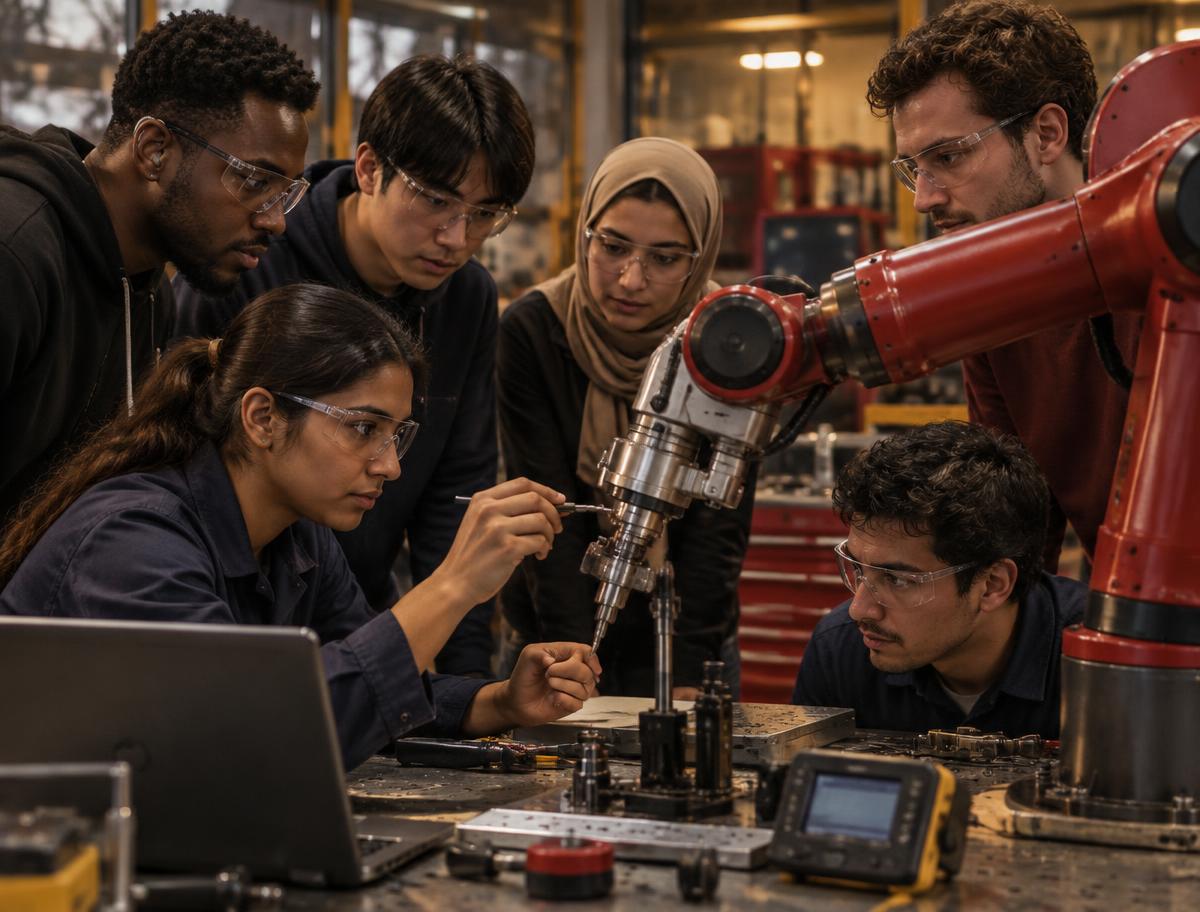
A mixed-race student team calibrating a six-axis robotic arm in a university workshop
The Forward Robotics Institute

Intelligence that has to survive contact with the real world.

Embodied intelligence built for African conditions — dust, heat, intermittent power, patchy connectivity, and the cost of a repair.

Stated plainly

The Institute is being built.

  • 01

    No robots have been deployed yet.

  • 02

    Groups form around a question and a testbed, not a title.

  • 03

    Every build must work offline-first and be repairable with locally available parts.

  • 04

    Undergraduates join a mission from year two.

Four missions

Every build starts with a testable question.

Each mission names the method, the place where it must work, and the evidence that counts as an output. None is presented as completed work.

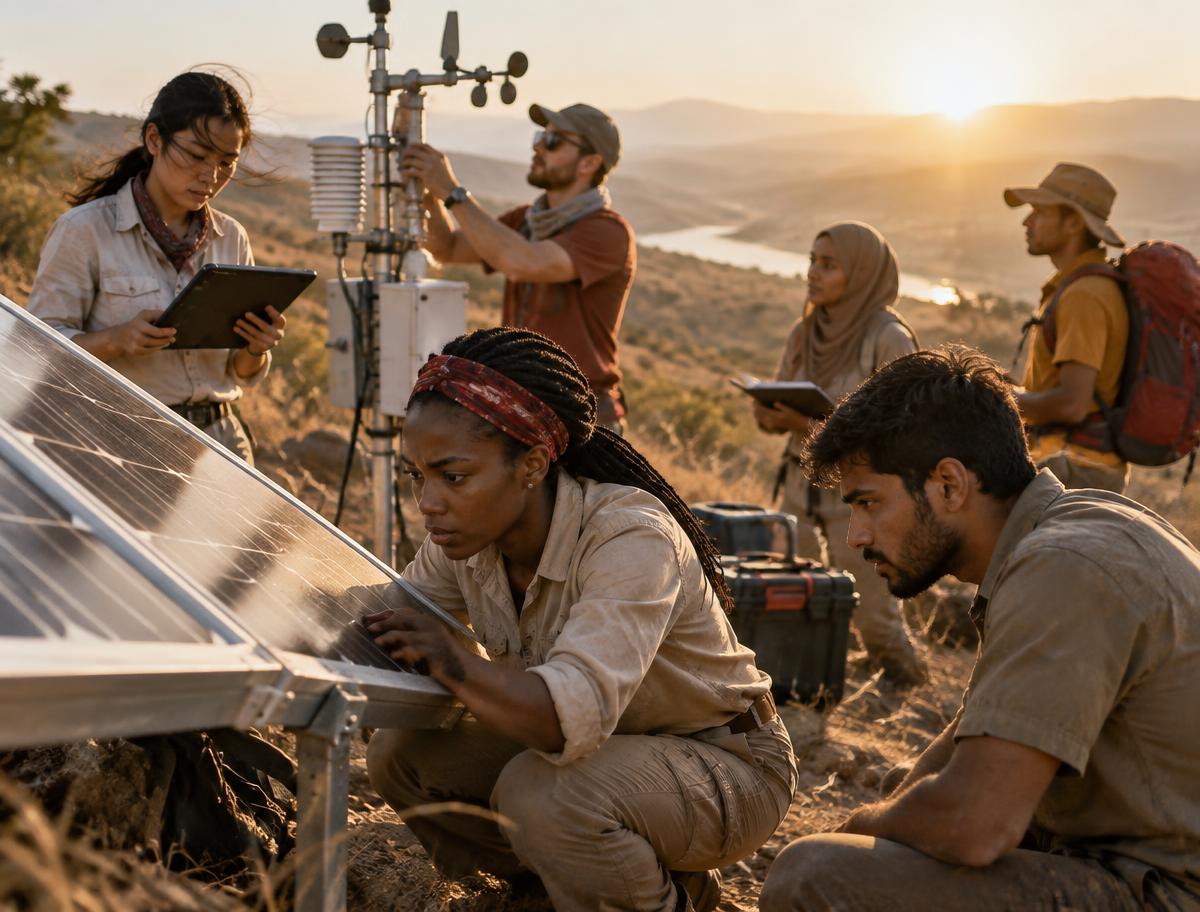
Engineers inspecting solar panels and a weather station on an African hillside
01Energy

Can a machine maintain infrastructure that no technician can reach in time?

Method
Autonomous inspection of solar arrays, transmission lines and mini-grids; drone and ground-rover fault detection; robotic cleaning for dust-loss recovery.
Testbed
The Forward campus micro-grid and partner solar installations. Both are planned testbeds; no field deployment is being claimed.
What counts as an output
Measured fault-detection rates, cost-per-inspection against a human baseline, and open hardware specifications.
School of Energy, Climate & Earth Systems
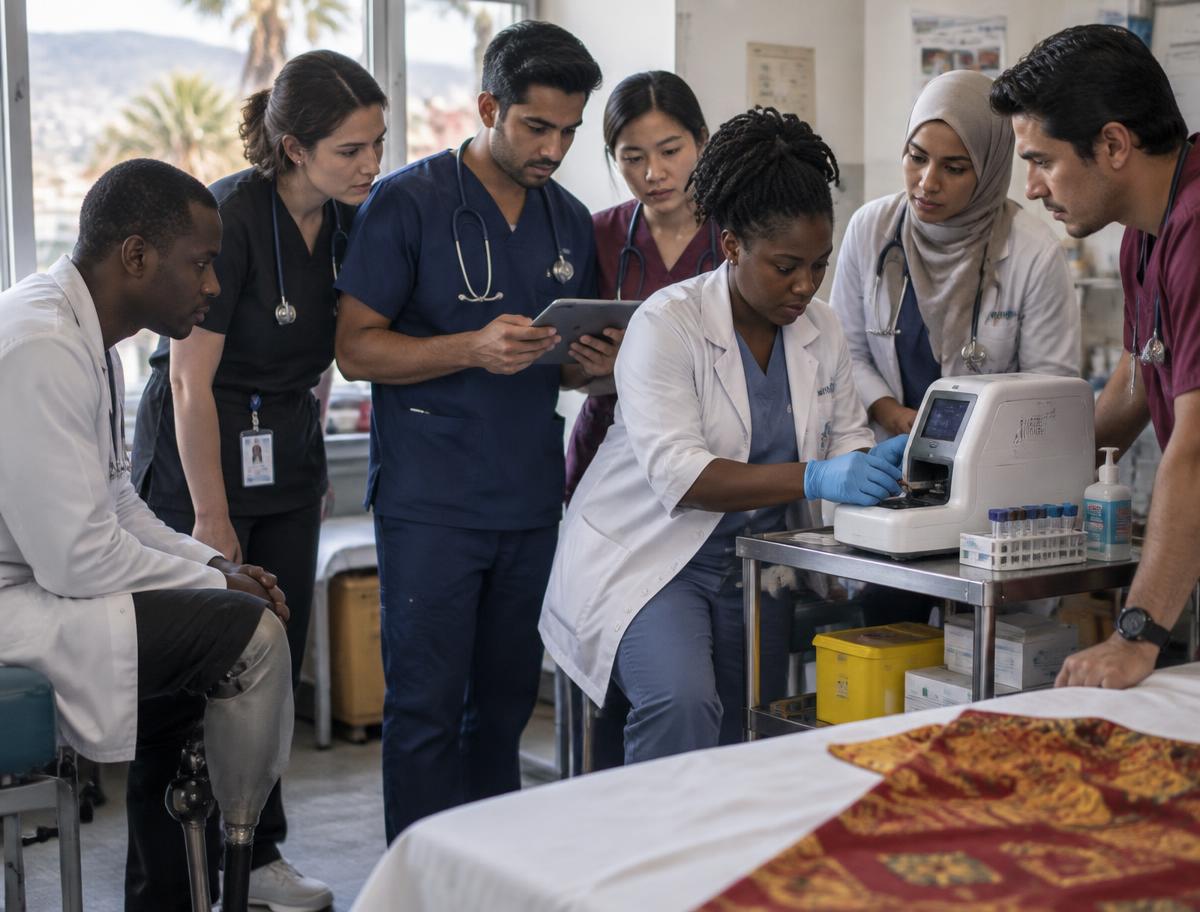
Clinicians, including a prosthetic leg user, working around a point-of-care diagnostic device
02Health

What can a robot do in a district facility that will never have a specialist on site?

Method
Lab-sample handling and transport robotics, assistive and rehabilitation devices, tele-operated ultrasound guidance, and cold-chain delivery drones.
Testbed
Partner district health facilities and the clinical simulation lab, subject to facility agreements and clinical review.
What counts as an output
Workflow evidence under real staffing constraints, device evaluations, and training material for existing staff.
School of Health, Life Sciences & Bioengineering
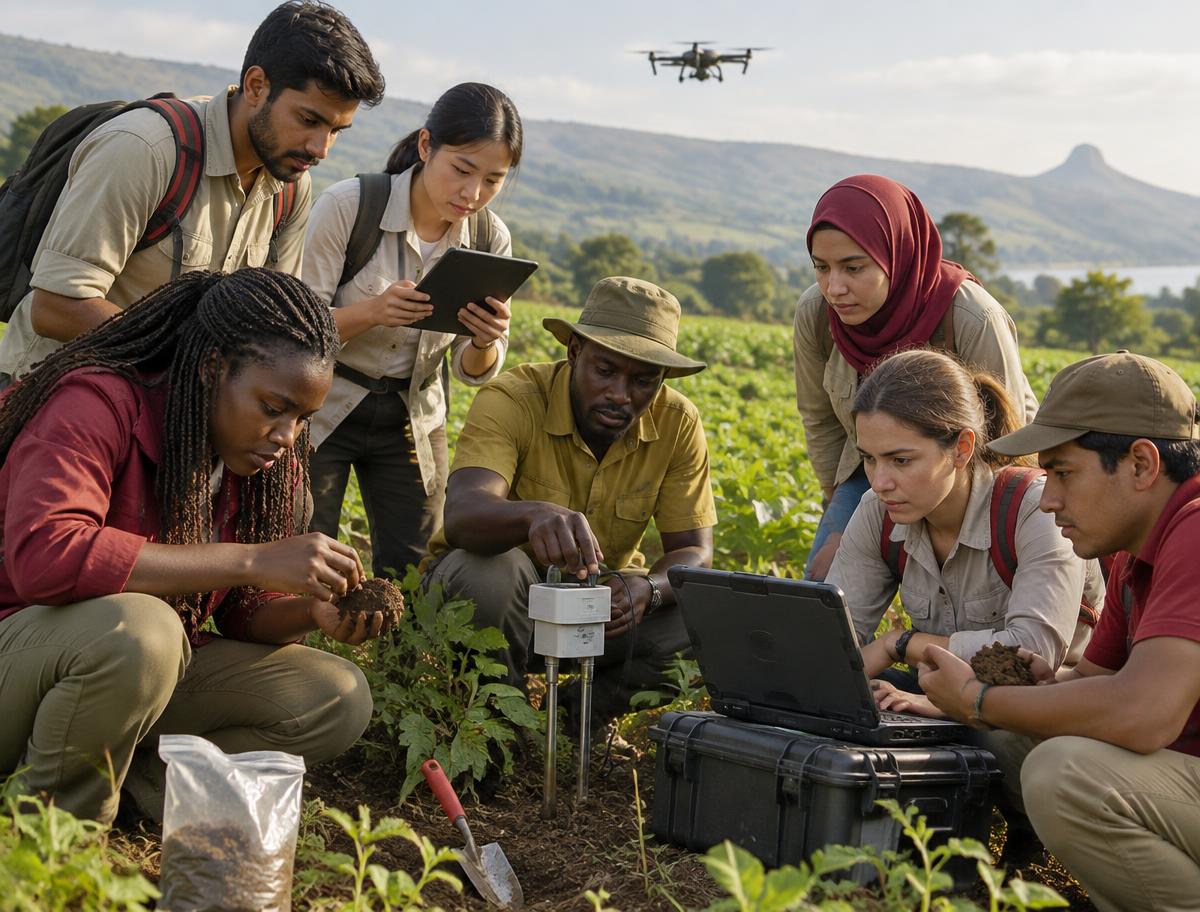
Agronomists using soil sensors in a field while a drone surveys overhead
03Agriculture

Which losses between a harvest and a plate are engineering problems?

Method
Precision weeding and selective-harvest robotics for smallholder plot sizes, autonomous soil and pest sensing, drone crop intelligence, and low-cost post-harvest automation.
Testbed
The University's planned demonstration farm and partner cooperatives, subject to field agreements.
What counts as an output
Loss maps per crop, field-trial yield data, and honest reporting where an intervention failed.
School of Agriculture, Food Systems & Agricultural Technology
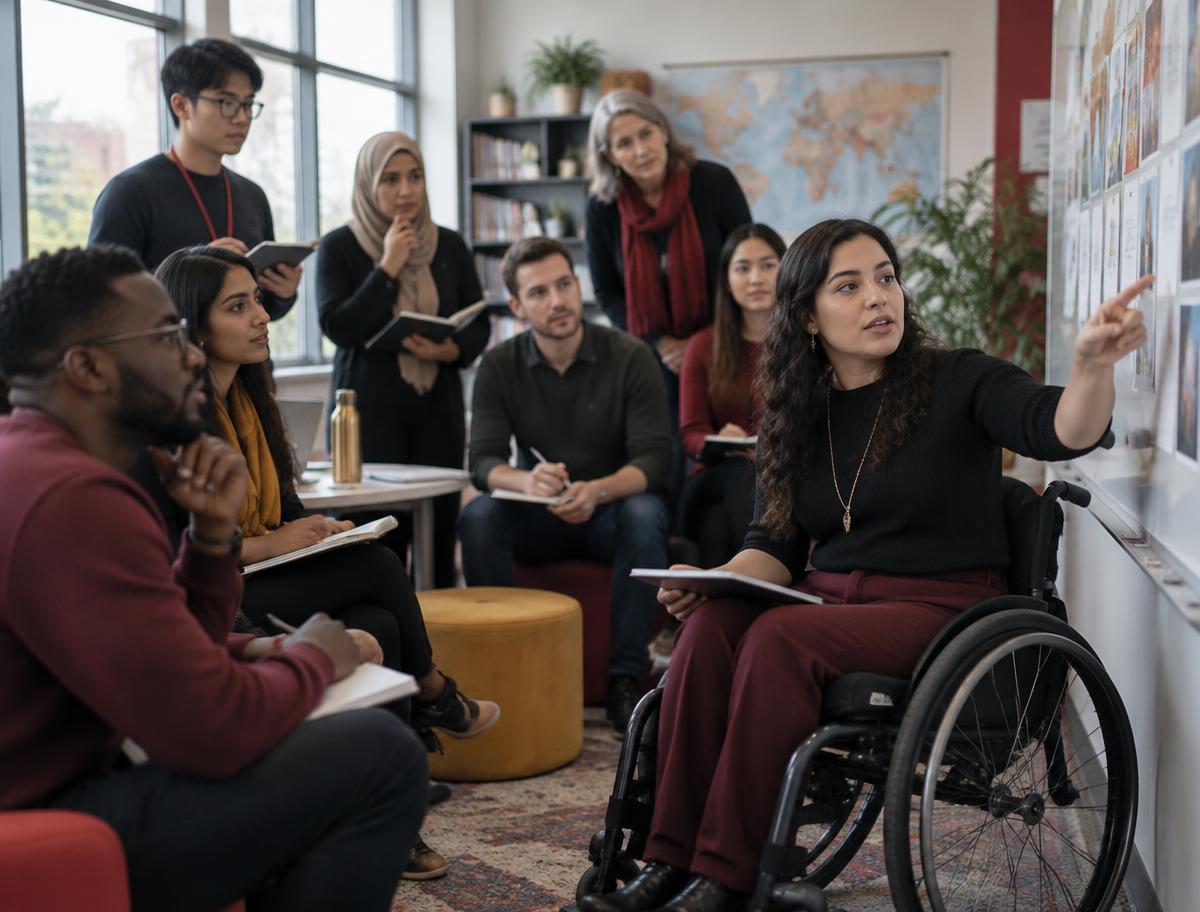
Trainee teachers, including a wheelchair user, rehearsing a lesson with their mentor
04Education

Does a robot in a classroom teach anything a screen cannot?

Method
Low-cost classroom robotics kits manufacturable in Uganda, embodied tutoring agents, teacher-training in robotics pedagogy, and a national schools robotics challenge.
Testbed
Partner secondary schools and the School of Education Futures, subject to school agreements and safeguarding review.
What counts as an output
Learning-gain measurement against control classrooms, open kit designs, and teacher curricula.
School of Education Futures

Labs

Tools are listed with their real status.

These facilities are being built in phases. Equipment lists describe the intended commissioning scope, not equipment already in service.

01

Being built — Phase 1

Embodied Intelligence Lab

Mobile manipulators, robot vision benches, force sensors, edge-compute stations, and offline simulation rigs.
02

Being built — Phase 1

Mechatronics & Fabrication Workshop

CNC tools, metal and polymer additive manufacturing, electronics benches, motor test rigs, and repair stations.

03

Being built — Phase 2

Field Robotics Yard

Dust, heat, terrain and intermittent-power courses for aerial, wheeled and legged systems.

04

Being built — Phase 2

Human-Robot Interaction Studio

Motion capture, accessible interaction stations, observation rooms, tele-operation rigs, and classroom test bays.

Utilities · hospitals · farms · schools

Bring us a problem that needs a body.

Forward is looking for organisations willing to supply a real operating environment, real constraints and a person who can judge whether a build is useful.

How cooperative education works